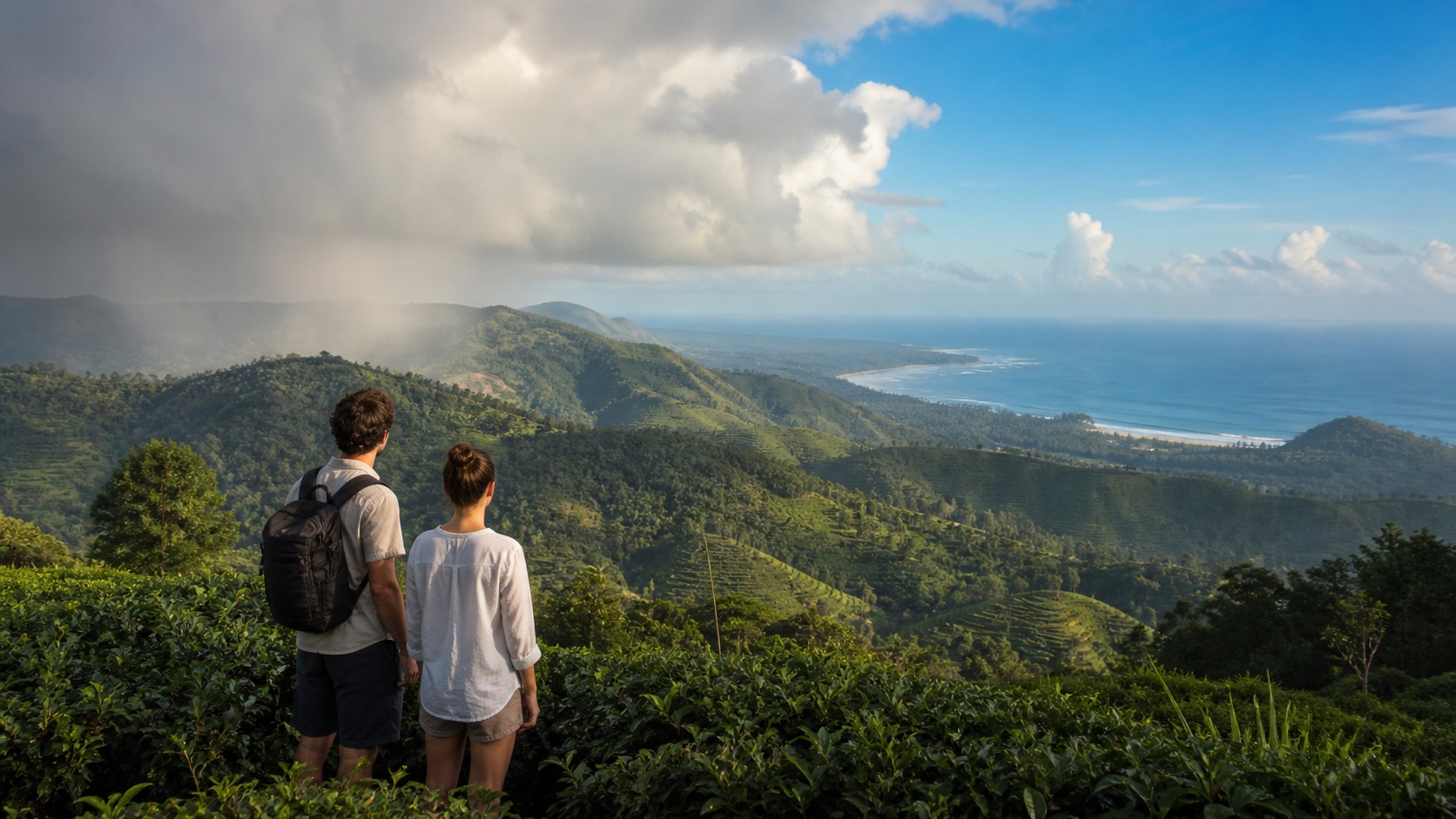
CLIMATE GUIDANCE CHECKED: 27 AUGUST 2026
Seasonal patterns help with long-range planning, but they are not a forecast. Tropical showers, rough seas, heat and local flooding can occur outside the expected window. Check the Sri Lanka Department of Meteorology and Disaster Management Centre shortly before and during your trip.
Ask five travellers for the best time to visit Sri Lanka and you may receive five different answers. That is not because the island has no reliable seasons. It is because Sri Lanka’s two monsoons affect different coasts at different times, while the central highlands create their own cooler, wetter microclimates.
The practical answer is to choose your dates and your region together. December can bring excellent beach weather in the south while the east receives seasonal rain. July can feel unsettled around Colombo and the western slopes, yet bright and relatively calm on parts of the east coast. This guide translates that pattern into a month-by-month plan for beaches, hill country, heritage sites and flexible round-island routes.
THE SHORT ANSWER
There is almost always a good region to visit
December to March is usually the simplest window for the south and west coasts. May to September generally favours the east and much of the north. The hill country is often clearest from January to April, although cool air, mist and showers remain possible at any time. October and November are the most changeable months island-wide.
Why Sri Lanka has more than one “best season”
Sri Lanka Tourism describes four broad climate seasons: the northeast monsoon, the first inter-monsoon, the southwest monsoon and the second inter-monsoon. The central highlands rise above the surrounding lowlands and alter wind, rainfall, temperature and humidity. As a result, conditions can change noticeably over a drive of only a few hours.
DECEMBER–FEBRUARY
Northeast monsoon
Rain is more influential in the east and northeast. The southwest coast is often sunnier, and its seas are frequently calmer, making this the main beach season around Bentota, Galle, Mirissa and Tangalle.
MARCH–APRIL
First inter-monsoon
Hot, humid days often build toward afternoon or evening thunderstorms. Many regions remain rewarding, but early starts and flexible outdoor plans become especially useful.
MAY–SEPTEMBER
Southwest monsoon
The southwest, west and western slopes of the highlands receive more seasonal rain and wind. The east coast and parts of the northern dry zone are often the better beach and outdoor choice.
OCTOBER–NOVEMBER
Second inter-monsoon
This is often the most unsettled island-wide period, with thunderstorms and occasional heavy rain possible across multiple regions. Build generous buffers into transfers and outdoor days.
A USEFUL REALITY CHECK
“Monsoon” does not automatically mean all-day rain
A wet-season day may include bright hours followed by a short, intense shower; another day may be grey and showery for longer. What matters most for travellers is not only rainfall, but also wind, sea conditions, road disruption, visibility in the hills and whether an activity can be moved to a different time of day.
Sri Lanka weather by month
This month-by-month guide is a planning framework, not a promise. Year-to-year conditions vary, and the start or end of a monsoon is not fixed to one date. Use the regional focus below to choose a route, then check a short-range forecast when the trip approaches.
January
FOCUS: SOUTH, WEST & HILLS
A strong all-round month for southern beaches, Galle, Colombo and much of the hill country. Expect cooler nights at elevation. The east can still receive northeast-monsoon rain.
February
FOCUS: SOUTHWEST CIRCUIT
Often one of the easiest months for combining the south coast, Cultural Triangle and highlands. Popular areas can be busy, so reserve key stays and transport early.
March
FOCUS: MOST REGIONS, EARLY STARTS
Hotter conditions build in the lowlands. The southwest may remain attractive, while afternoon thunderstorms become more likely as the first inter-monsoon develops.
April
FOCUS: FLEXIBLE ISLAND ROUTES
Commonly hot and humid, with thunderstorms that often arrive later in the day. Beaches and heritage sites can still work well when sightseeing begins early.
May
FOCUS: EASTWARD SHIFT
The southwest monsoon begins influencing the west, southwest and western hill slopes. East-coast plans become increasingly appealing; check sea and road conditions before transfers.
June
FOCUS: EAST COAST & DRY ZONE
Wind and showers are more likely in western regions, while Trincomalee, Pasikuda and the east often offer a brighter coastal alternative. Hill-country weather can be misty.
July
FOCUS: EAST, NORTH & CULTURE
A useful month for eastern beaches, the Cultural Triangle and northern routes. Western showers remain possible, but dry intervals can still produce enjoyable city days.
August
FOCUS: EAST-COAST BEACH TIME
The east is commonly the safer seasonal bet for beach plans. The Cultural Triangle can be hot, so schedule exposed ruins and climbs for morning or late afternoon.
September
FOCUS: EAST, WITH TRANSITION BUFFER
Eastern conditions may remain favourable, but the island starts moving toward the second inter-monsoon. Keep final-week plans flexible and watch official forecasts.
October
FOCUS: CULTURE, FOOD & FLEXIBILITY
A changeable month with thunderstorms possible across the island. Avoid building a trip around one weather-sensitive activity and leave extra road time.
November
FOCUS: TRANSITIONAL ROUTES
Island-wide rain risk can remain elevated. The southwest often begins improving later in the month, but travellers should retain indoor alternatives and transfer buffers.
December
FOCUS: SOUTH & WEST RETURN
The southwest beach season usually gathers pace, while the east and northeast enter their wetter monsoon. Holiday demand rises sharply around late December.
Best time to visit each coast and region
South and southwest coast
Galle, Unawatuna, Mirissa, Weligama, Bentota and Tangalle are usually easiest from roughly December through March. April can remain rewarding but becomes hotter and more thundery. From May to September, expect more rain, wind and variable sea conditions.
Simplest window: December–March
East and southeast coast
Trincomalee, Nilaveli, Pasikuda and Arugam Bay generally receive their more dependable beach window between May and September. The northeast monsoon brings a greater rain and rough-sea risk from around November into February.
Simplest window: May–September
Central highlands
Kandy, Nuwara Eliya, Ella and Haputale are cooler than the lowlands. January to April often brings clearer views, but highland weather changes quickly. Western slopes are more exposed to the southwest monsoon, and mist or showers can occur year-round.
Clearest general window: January–April
Cultural Triangle
Sigiriya, Dambulla, Polonnaruwa and Anuradhapura lie largely in the dry zone. December to February can bring rain linked to the northeast monsoon; March and April are often very hot. May to September can work well when you start early and protect yourself from sun and heat.
Good strategic window: May–September
North and Jaffna Peninsula
Northern Sri Lanka is hot for much of the year. The northeast monsoon makes the final months of the year and early January less predictable, while late spring through summer is generally drier but can feel intense in the midday sun.
Drier general window: February–September
Colombo and the west coast
Colombo remains a year-round city destination, but December to March usually gives the most comfortable chance of combining it with west-coast beaches. May and June are commonly wetter and windier; urban sightseeing is still possible between showers.
Simplest leisure window: December–March
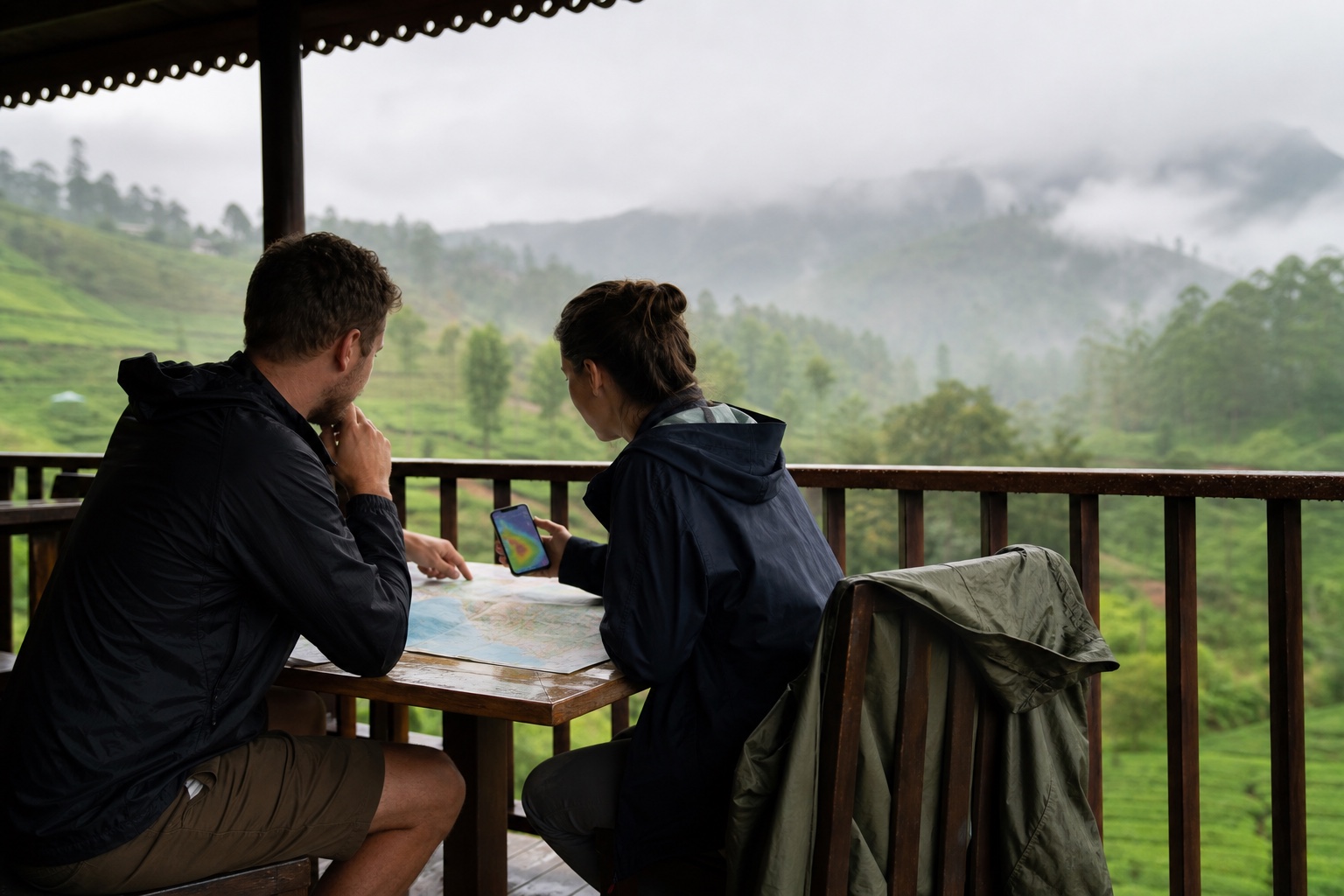
Match the season to the trip you actually want
A month that is imperfect for one coast may be excellent for a different style of holiday. Before choosing flights, rank the experiences that would be hardest to replace. A surf break, whale-watching departure, mountain view or long beach stay is more weather-sensitive than a food tour, temple visit or museum day.
For a south-coast beach holiday
Prioritise January or February for the simplest seasonal odds, then add Galle and the hill country. December and March are also strong options, with late December bringing heavier demand.
For an east-coast beach holiday
June through August is the clearest starting point. Combine the coast with Sigiriya, Polonnaruwa or the north rather than forcing a long transfer to wetter western beaches.
For hill-country walks and views
February and March often balance clearer conditions with a broad island route. Even then, carry rain protection and treat visibility-dependent viewpoints as movable rather than fixed appointments.
For wildlife and nature
Choose the park before the month. Rainfall, water levels, temporary closures and wildlife movement vary by region. Never assume a dry season guarantees a sighting, and confirm park notices close to the visit.
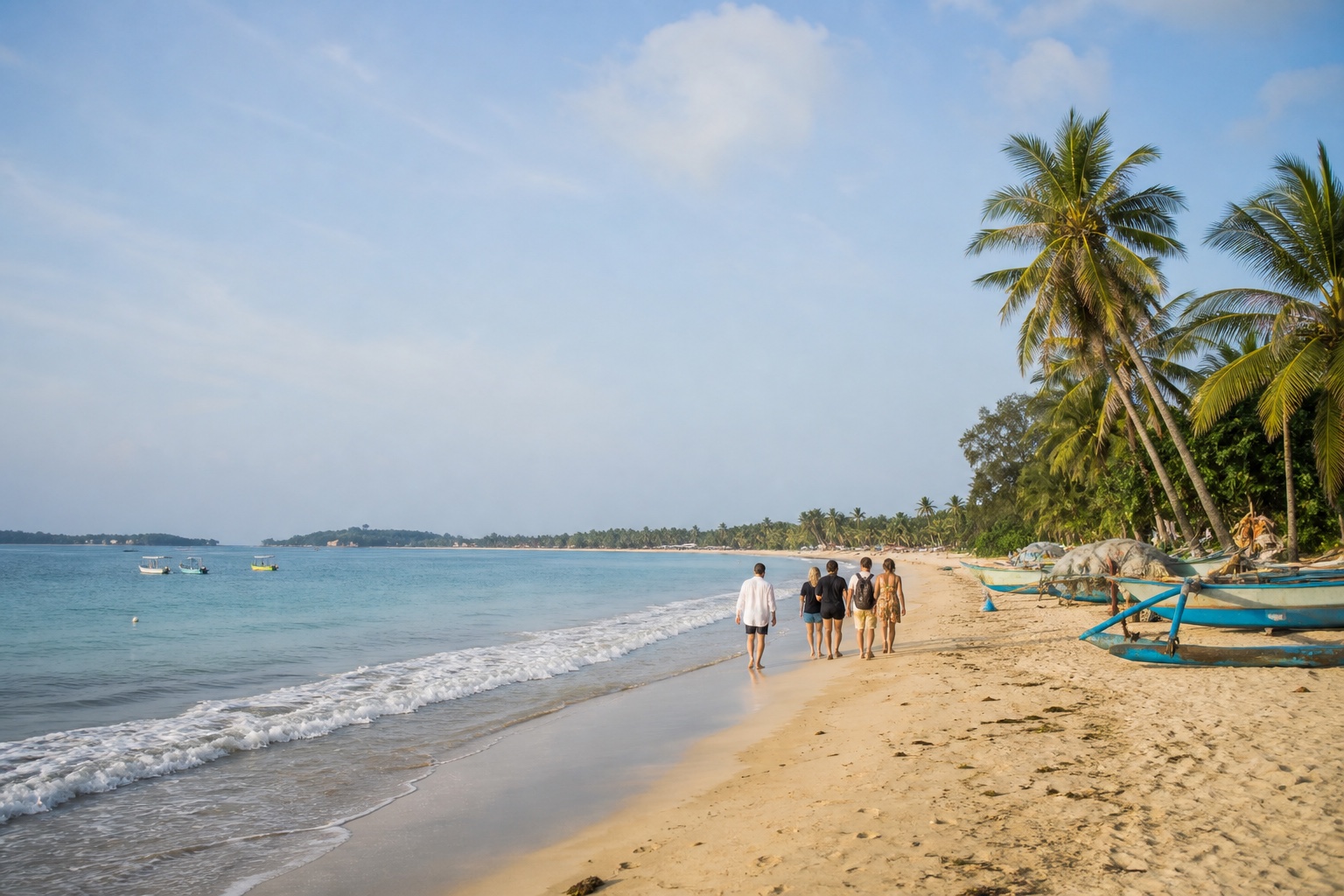
Three weather-smart route ideas
JANUARY–FEBRUARY · 10–12 DAYS
Route: Negombo or Colombo → Cultural Triangle → Kandy → Ella → south coast → Galle
This classic loop uses the southwest beach season while keeping the east out of a more rain-prone period.
JUNE–AUGUST · 10–12 DAYS
Route: Colombo → Sigiriya → Polonnaruwa → Trincomalee or Pasikuda → Kandy
The route follows the drier east-coast tendency and keeps outdoor heritage visits early in the day.
OCTOBER–NOVEMBER · 8–10 DAYS
Route: Colombo → Kandy → Cultural Triangle, with the final coast chosen from the live forecast
Use two- or three-night bases, refundable beach bookings and indoor alternatives rather than a tightly timed island circuit.
MARCH–APRIL · 7–10 DAYS
Route: Cultural Triangle → Kandy → hill country → one coast selected by the forecast
Start walks, climbs and ruins early; reserve late afternoons for cafés, spas, cooking classes or travel time.
For a multi-region trip in a changeable month, a flexible Car Hire with Driver arrangement can make it easier to adjust departure times or reorder stops when regional weather shifts. Compare the total cost and cancellation terms with trains and point-to-point transfers before deciding.
How to plan around rain without losing the trip
Frequently asked questions
What is the best month to visit Sri Lanka overall?
February is one of the easiest compromises for a first trip covering the south, west, Cultural Triangle and highlands. It is not the best month for every east-coast plan, so region still matters.
Can I visit Sri Lanka during a monsoon?
Yes. Choose the less-affected coast, keep plans flexible and monitor warnings. Monsoon weather can include long dry intervals, but heavy rain, rough seas and disruption remain possible.
When is Sri Lanka least crowded?
Crowds often ease outside late December, January and major holiday periods, but quieter months can bring more unsettled weather in some regions. May, June and September may offer a useful balance when the route follows the season.
Is October a bad time to visit?
Not necessarily, but it is one of the harder months for weather-led planning. Use fewer bases, refundable reservations and a mix of indoor and outdoor activities.
How cold is the hill country?
It is much cooler than the coast, particularly at night and before sunrise. Nuwara Eliya and exposed viewpoints can feel chilly in wind or rain, so bring a warm layer even when the lowlands are hot.
How far ahead can I trust a forecast?
Use climate patterns months ahead, but use forecasts for short-term decisions. Check again a few days before each weather-sensitive activity and on the morning itself.
The practical verdict
For a classic first trip built around the south, west and hill country, aim for January through March. For east-coast beaches and a dry-zone route, look first at June through August. If your dates fall in April, October or November, reduce the number of fixed outdoor commitments and let the short-range forecast shape the final coast.
The real secret is not finding a completely rain-free month. It is matching your route to Sri Lanka’s regional seasons, leaving enough time for conditions to change and treating a tropical shower as part of the journey rather than proof that the trip was timed badly.
CHECK BEFORE YOU TRAVEL
Use official forecasts and warnings for live decisions
This guide explains typical climate patterns. For current rain, wind, sea or severe-weather information, rely on Sri Lanka’s official agencies and follow local instructions.
Editorial note: Ceylon Guidebook is an independent travel publication. Seasonal descriptions are planning guidance, not guarantees. We recommend checking official information and the terms of every weather-sensitive booking.




 English
  French
  German
  Spanish
  Dutch
Dutch  Chinese
  Hindi
Hindi  Arabic
コメント