TRANSPORT INFORMATION CHECKED: 30 AUGUST 2026
Timetables, seat availability, app coverage, road conditions and quoted prices can change. Use this guide to choose the right transport mix, then confirm live details with the operator before travel.
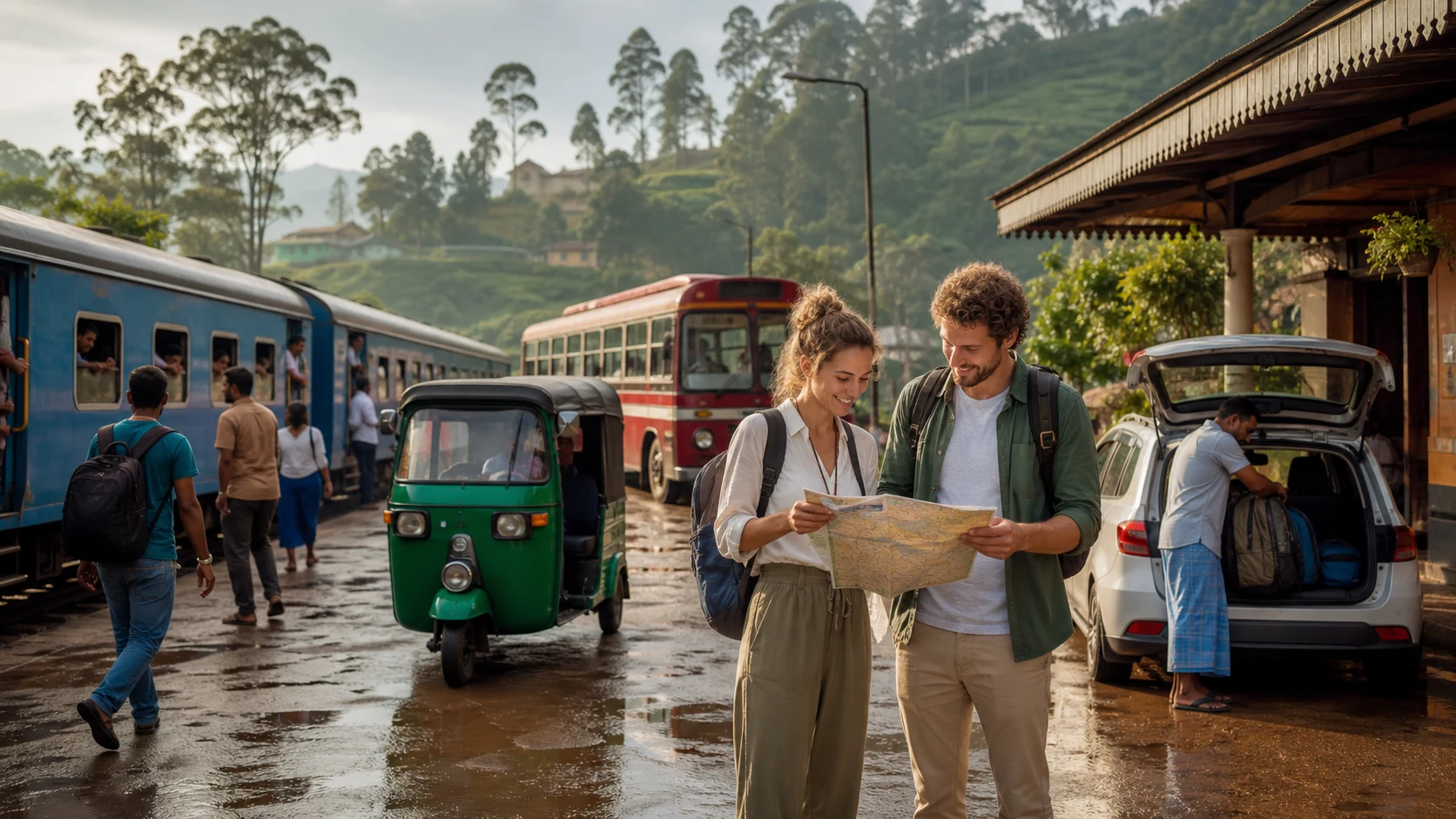
Getting around Sri Lanka is less about finding one perfect vehicle and more about matching each leg of the trip to the job. Trains deliver memorable scenery, buses reach almost everywhere, tuk-tuks solve short local journeys, ride-hailing apps simplify many urban trips, and a private car makes complicated multi-stop routes far easier.
The island looks compact on a map, but average road speeds can be modest and rail journeys are not always direct. A route that combines the Cultural Triangle, hill country and a southern beach therefore needs a different plan from a week based in Colombo or Galle. Luggage, children, arrival time and how often you change hotels matter as much as the ticket price.
THE SHORT ANSWER
Use a mix: public transport for simple routes, private transport where logistics become the holiday
A train can be the experience between Kandy and Ella; a tuk-tuk can be the easiest way to reach dinner; a driver can protect a multi-stop day from missed connections. Choose each leg separately instead of forcing one transport style across the whole island.
Sri Lanka transport decision table
This comparison is about practical fit, not a permanent price ranking. Public transport is generally cheapest, but a shared vehicle can become competitive for a family or group once airport pickups, station transfers and luggage are included.
SCENIC & SOCIAL
Train
Best for selected intercity corridors and the hill-country experience. Reserved seats improve certainty, while ordinary services can be crowded and delays do occur.
WIDEST NETWORK
Public bus
Best for low-cost travel between towns and places that the railway does not serve. Frequency can be useful, but comfort, space and boarding information vary.
SHORT LOCAL HOPS
Tuk-tuk
Best for a few kilometres, station-to-hotel transfers and spontaneous stops. Agree the fare or use a meter/app before departure and keep luggage within the vehicle.
ON-DEMAND
Ride-hailing or taxi
Best in and around major cities, airports and established tourist centres. The app creates a digital record and fare estimate, but coverage and driver acceptance are not uniform.
MAXIMUM INDEPENDENCE
Self-drive
Best only for confident travellers who verify licence/permit and insurance requirements and are comfortable with local traffic, left-side driving and variable road conditions.
DOOR TO DOOR
Car Hire with Driver
Best for multi-city circuits, families, groups, bulky luggage, early starts and routes with several stops. Compare complete itinerary quotes rather than a headline daily rate.
PLANNING A MULTI-STOP ROUTE?
Compare the whole journey, not just one transfer
Ask for a route-specific quote that lists the vehicle, luggage capacity, fuel, tolls, parking, waiting, mileage and driver overnight arrangements. That makes a private option comparable with separate trains, taxis and hotel transfers.
Compare Car Hire with Driver optionsWhy journeys take longer than the map suggests
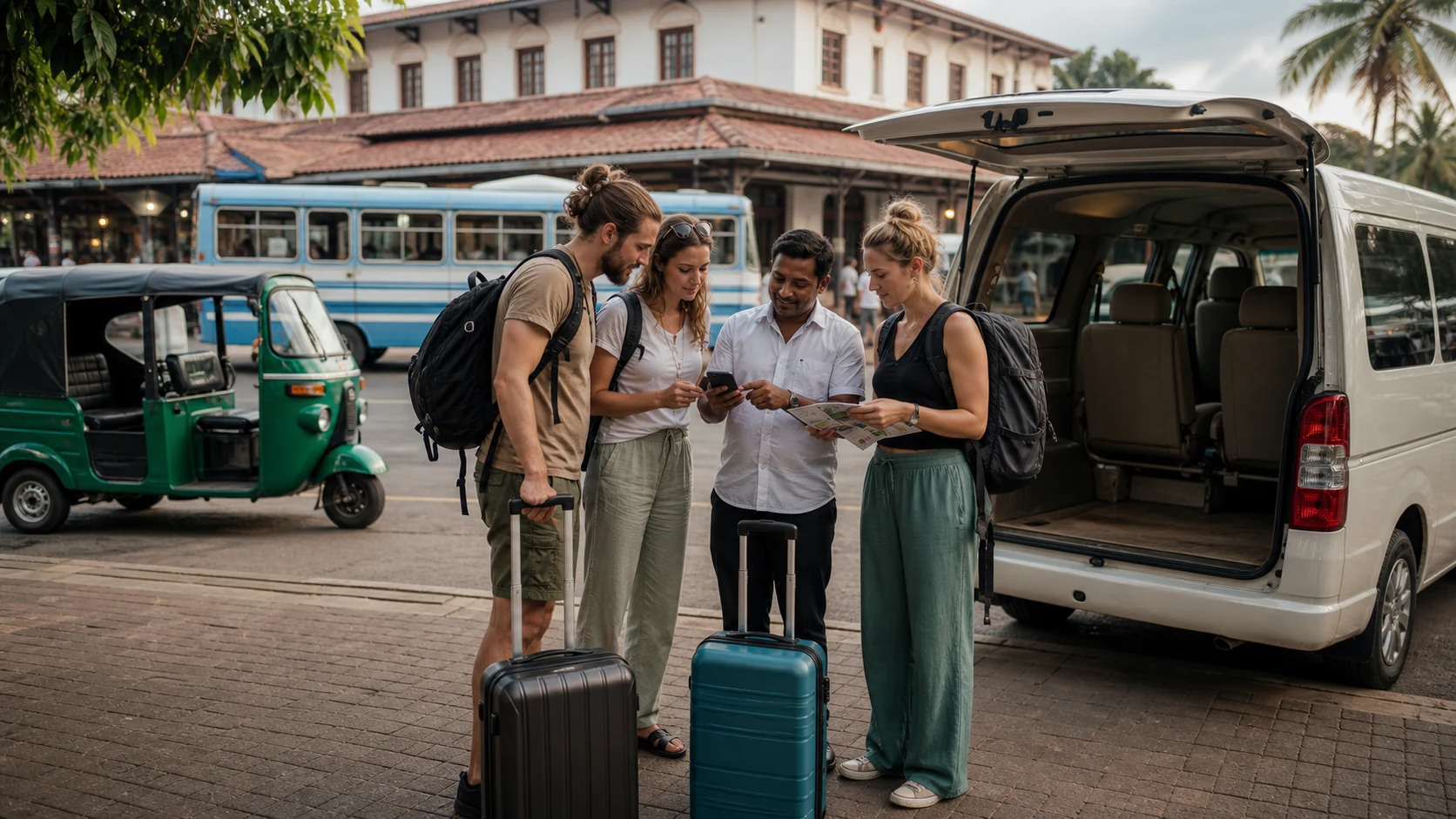
Sri Lanka is roughly 445 kilometres from north to south, yet the travel experience is shaped by dense towns, mixed traffic, mountains, level crossings and roads that invite slower speeds. A short-looking route can pass schools, markets and town centres, while hill-country roads add bends and elevation. Travel time is therefore a route question, not a distance calculation.
Rail is also a network rather than a straight-line substitute for the road. Some popular journeys require a connection, a transfer from the station or an inconvenient departure time. Build each day from the published timetable, then add realistic time for reaching the station, buying or collecting tickets, boarding and travelling from the arrival station to the hotel.
A better planning habit
Keep one demanding transfer and one important activity from competing for the same morning. If the train or road journey is central to the experience, treat it as the day’s main event rather than a gap between two attractions.
Travel by train: scenic, affordable and worth planning
Rail is one of the most memorable ways to travel in Sri Lanka. The network links Colombo with Kandy and the central highlands, serves the southwest coast, and extends to northern and eastern destinations. The famous hill-country line is an experience in its own right, but the most photographed section is not automatically the best transport choice for every itinerary.
Use the official Sri Lanka Railways schedule search for departure times and connections. Reserved seats are sold through the official reservation system and can be valuable on popular services. The current reservation FAQ says bookings open up to 30 days in advance, online booking closes two hours before departure and a reservation can contain up to five seats. Recheck those rules when your travel date approaches.
Train works well when
The route is direct, the scenery matters, you can travel lightly, and the departure time fits the itinerary without creating a rushed station transfer.
Choose another option when
You have large luggage, a tight flight or hotel connection, mobility constraints, several sightseeing stops, or no workable reservation on a busy route.
Keep bags close enough to supervise and avoid standing or leaning outside open doors. The better photograph is never worth an unsafe position. At the destination, expect a final tuk-tuk, taxi or hotel transfer because many stations are not beside the accommodation area.
Travel by public bus: inexpensive and extensive
Buses go where trains do not. They connect cities, provincial towns, beach areas and rural junctions, and they are often the cheapest way to keep moving. Intercity and express services may provide a more direct trip, while local buses stop frequently and can be useful for short regional journeys.
The National Transport Commission publishes information and an interprovincial timetable, but not every local service is easy to research online. Ask the hotel, station staff or conductor which bus, platform and final stop you need. Keep the destination written down and follow the route on an offline map when possible.
Space is the main trade-off. Large suitcases are awkward on crowded services, and air conditioning, seat condition and driving style vary. Keep passports, money and electronics in a small bag on your person. If boarding with luggage, clarify where it will be placed and do not block the aisle or an exit.
Bus ticket check
Ask for the fare and retain the ticket. The National Transport Commission publishes passenger information and complaint channels for regulated services. Note the vehicle number, route and time if you need to report a problem.
Tuk-tuks: ideal for the last few kilometres
A tuk-tuk is often the simplest answer between a station and guesthouse, around a beach town, or for a short city trip where a car would be cumbersome. They are part of everyday Sri Lankan transport, easy to find in visitor areas and well suited to spontaneous stops.
Use a functioning meter, book through a reputable app where coverage exists, or agree the total fare before moving. Confirm whether the quote is per vehicle, not per passenger, and make sure driver and passenger understand the destination. A map pin helps when properties have similar names.
Tuk-tuks offer limited weather protection and very little secure luggage space. A large case can reduce visibility or make the vehicle unstable. For longer highways, night travel, heavy rain or airport luggage, a car is usually more comfortable and may be safer.
Ride-hailing apps and ordinary taxis
PickMe and Uber operate in Sri Lanka, with availability strongest in larger urban and tourist areas. PickMe lists tuk, car, minivan and van categories, while Uber offers city rides and intercity options in supported locations. An app can show a fare estimate, vehicle details and trip record, which is useful when language or cash negotiation would otherwise create friction.
Availability is not guaranteed simply because an app displays a service. Drivers may be scarce outside core areas, reject an unattractive return journey or ask for clarification about a distant destination. Schedule or request early for flights and trains, and keep the accommodation’s phone number available.
Check what the displayed fare includes. Uber’s Sri Lanka intercity page notes that tolls and parking can be additional and that the final fare may vary. For a street taxi, agree the price, route, waiting time and tolls before departure. Share the vehicle details with a travel companion for late or unfamiliar journeys.
Self-drive cars, tuk-tuks and scooters
Self-drive travel promises freedom, but it has the highest pre-trip verification burden. Do not assume that your home licence or an International Driving Permit is sufficient by itself. Confirm the current Sri Lankan recognition or temporary-permit process with the Department of Motor Traffic or a properly authorised provider, and obtain written confirmation that the vehicle, driver and intended use are insured.
Traffic drives on the left. Buses, tuk-tuks, motorcycles, pedestrians, animals and overtaking vehicles may share narrow roads, and journeys become more demanding after dark or in heavy rain. International travel advisories warn about road conditions and driving standards. If you are not comfortable with these conditions, hiring a driver is not a loss of independence; it is a decision to spend attention on the trip instead of the road.
Before accepting any self-drive vehicle
Photograph existing damage, tyres and fuel level; test lights, brakes and indicators; read the excess and exclusions; confirm roadside support; and ask exactly which documents must be carried. Never hand over your passport as an open-ended deposit.
Private car with driver: when door-to-door wins
A private car with driver is most valuable when the route contains several hotel changes, early starts, rural stops or luggage that makes public transport difficult. It can join places that do not connect neatly by rail, wait while you visit a site, and deliver you directly to the next accommodation. Families and groups also spread the vehicle cost across more travellers.
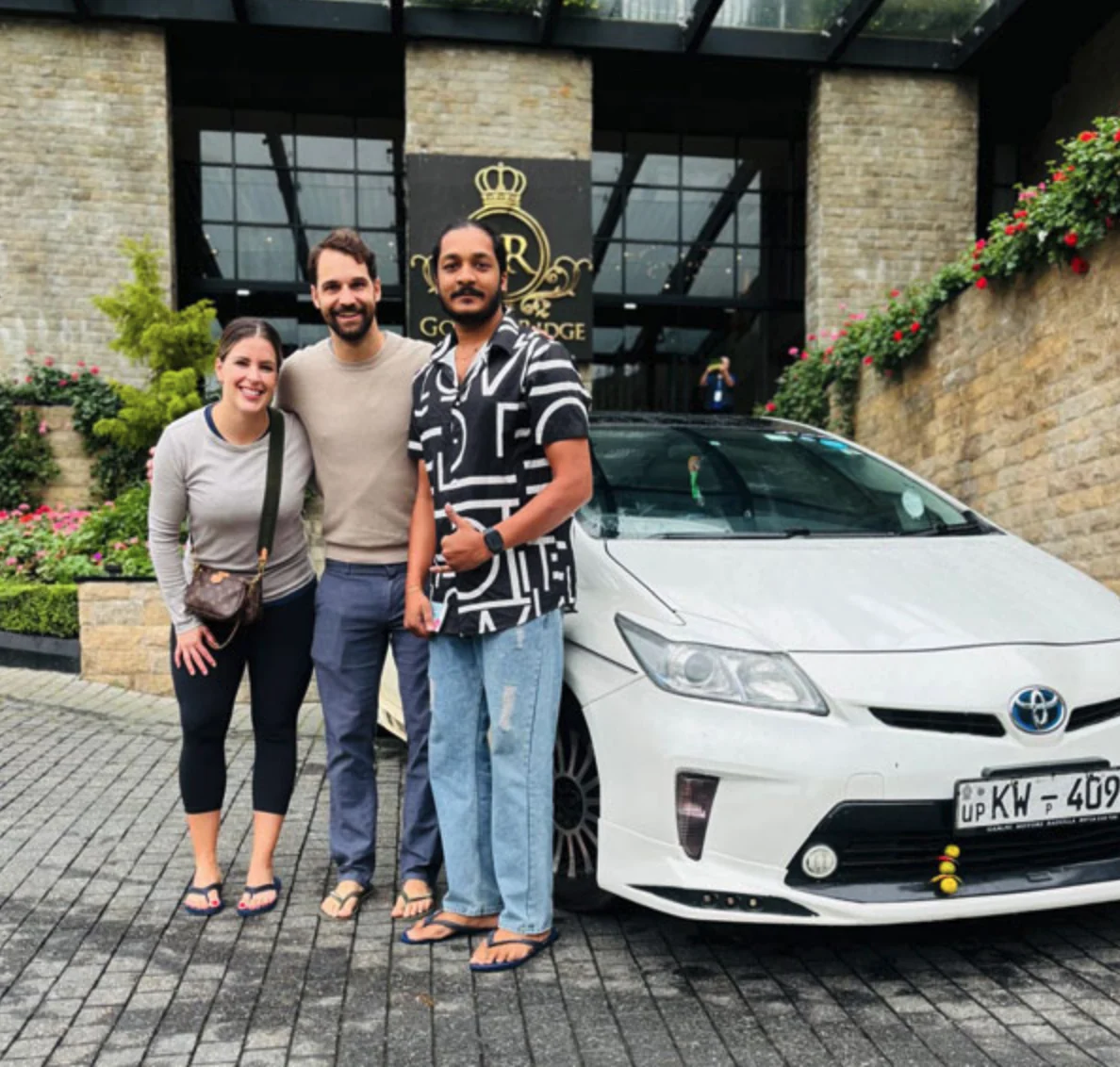
Compare like with like. A quote should identify the vehicle, passenger and luggage capacity, route, dates, daily kilometre allowance, overtime, fuel, expressway tolls, parking, waiting, airport charges and driver accommodation or meals. Ask whether sightseeing detours are included and how the price changes if you add a night or alter the final destination.
Check the operator’s identity, reviews, contact details and cancellation terms. SLTDA provides registration pathways for tourism businesses and tourist drivers; a registration claim should be independently verifiable. Seat belts should be usable for every passenger, and a child’s restraint needs to be requested before arrival because it may not be standard equipment.
Airport arrivals: decide before you land
Bandaranaike International Airport publishes ground-transport information, including airport taxi and public transport options. The best choice depends on arrival time, destination and how much luggage you have. Colombo, Negombo and a directly booked airport hotel are simple; a late-night transfer to the Cultural Triangle, hill country or south coast needs more planning.
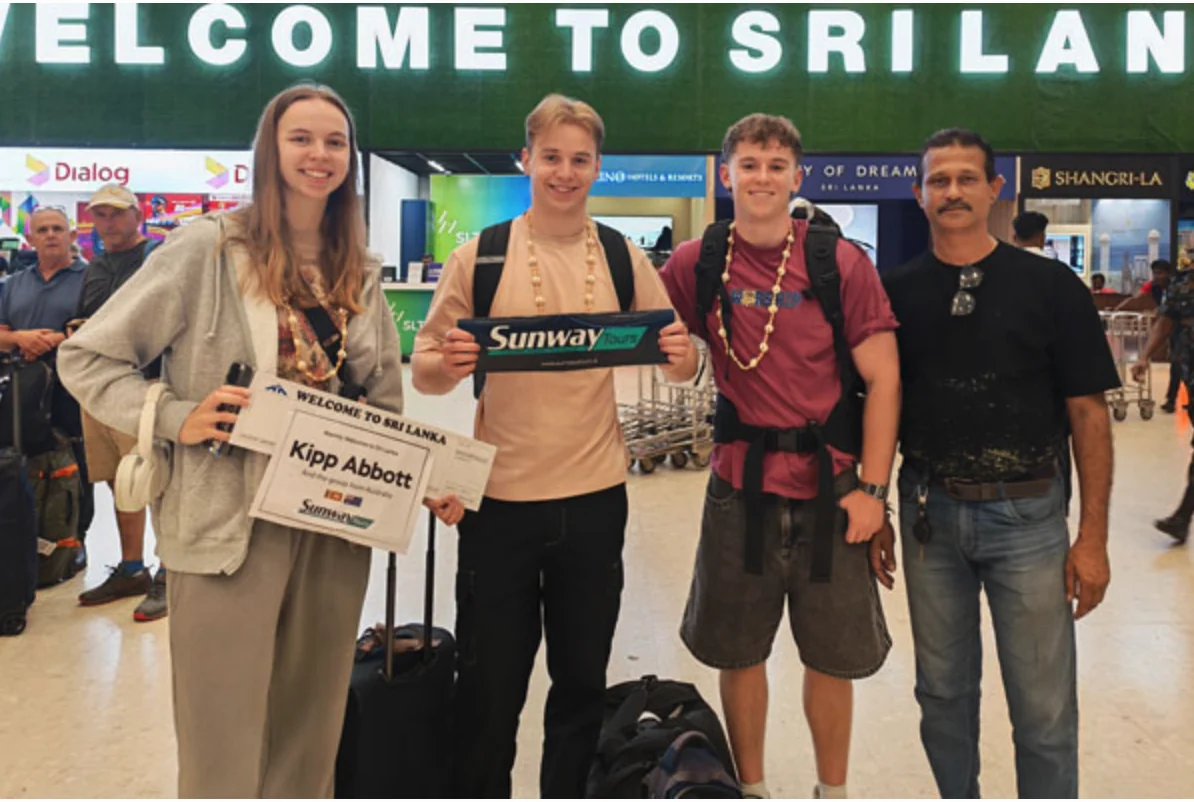
When pre-booking, send the flight number rather than only the scheduled landing time. Agree what happens after a delay, how long the driver will wait, where the name board will be held and whether parking or expressway tolls are included. Keep the confirmation offline because airport connectivity and roaming setup can take time.
Luggage, families and group travel
Vehicle capacity is not the same as luggage capacity. A car advertised for four passengers may not hold four large suitcases, and a van with every seat occupied can lose most of its cargo space. Send the provider an honest count of checked bags, cabin bags, pushchairs, wheelchairs, sports equipment and child seats before accepting a vehicle.
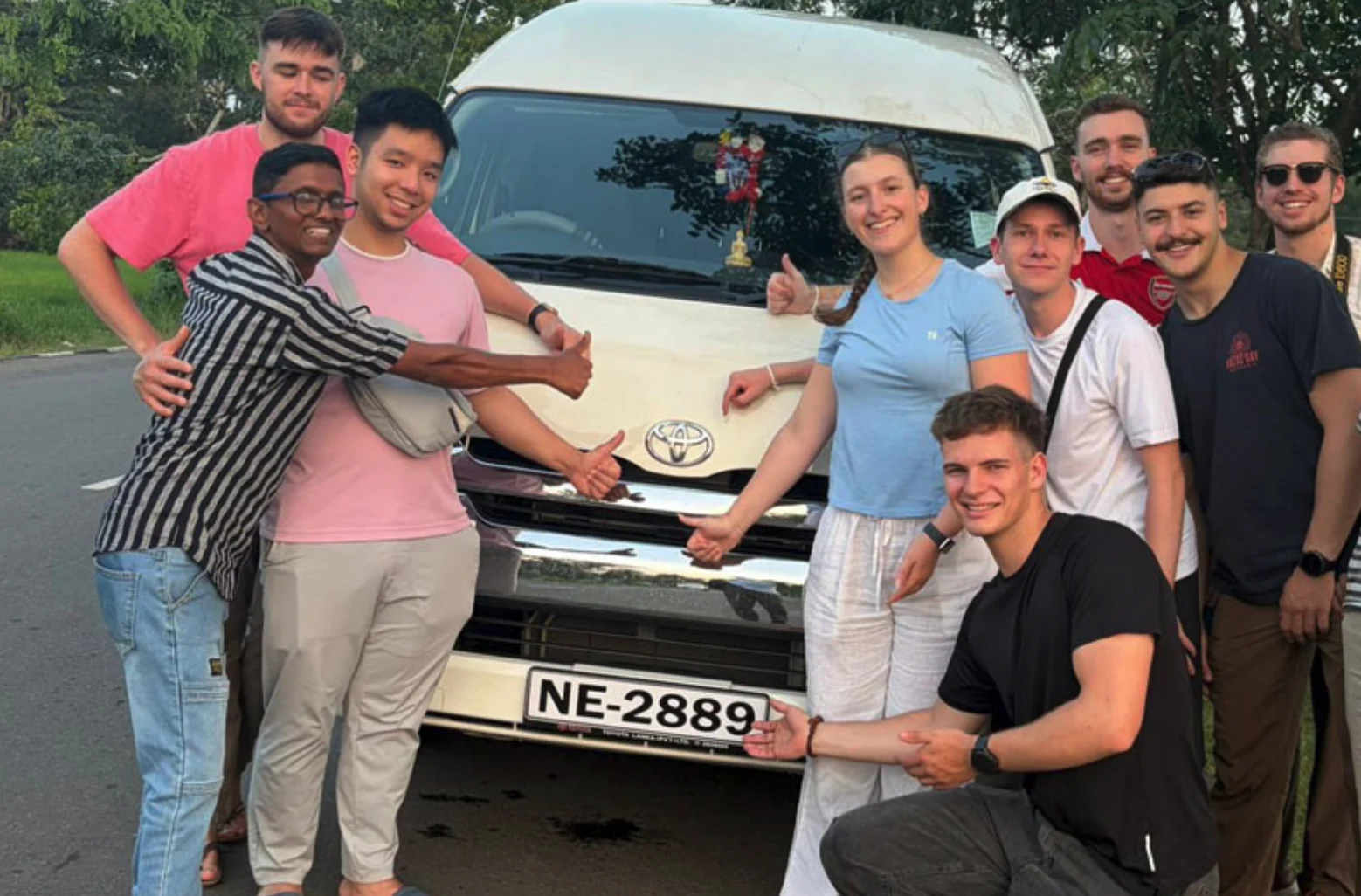
Families benefit from fewer platform changes, easier snack and toilet stops, and the ability to adjust a day around children. That convenience does not remove safety checks: request the correct child restraint, confirm seat belts and allow breaks. A journey that adults tolerate without stopping may be unrealistic for a young child.
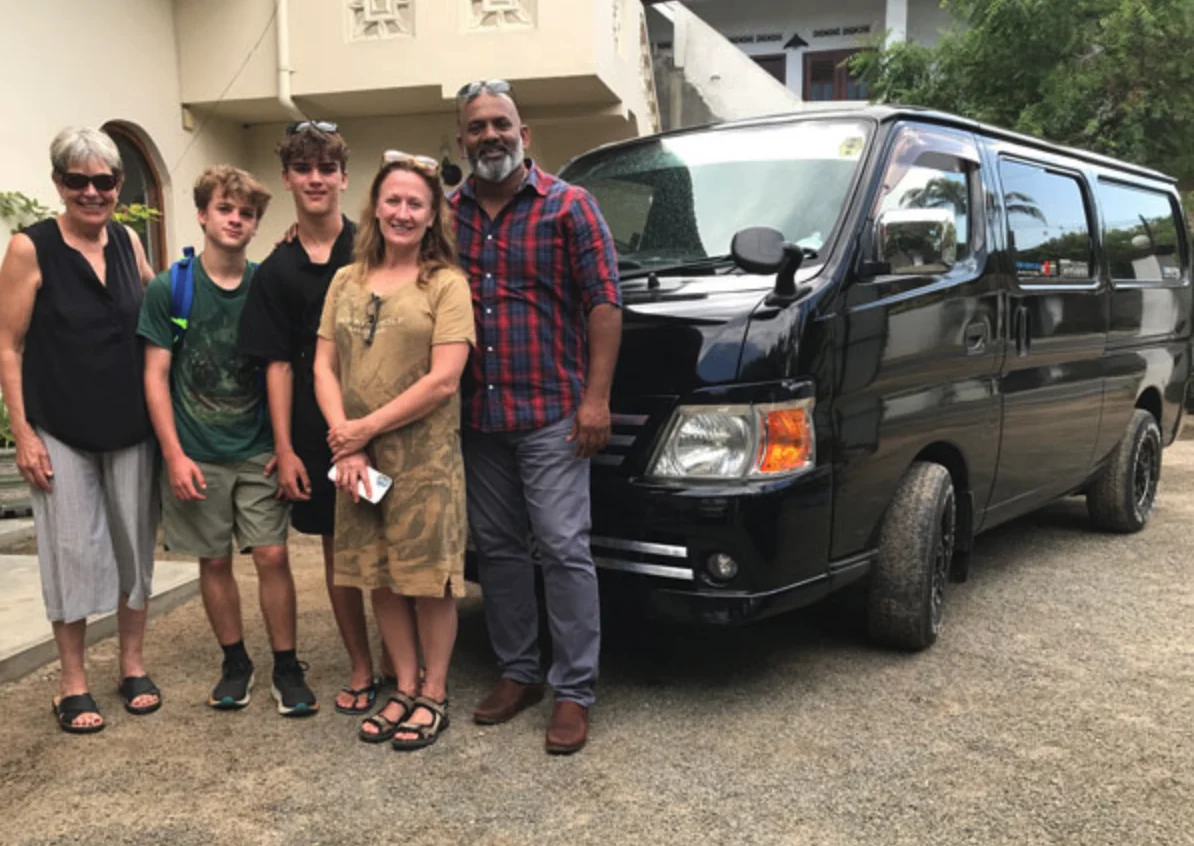
Which transport fits your itinerary?
Colombo–Kandy–Ella–south coast
Reserve the scenic rail leg that matters, then use a transfer or driver for difficult station access, luggage and the cross-country connection to the coast.
Best mix: train + car/taxi
Cultural Triangle and east coast
Ancient sites, national parks and beach towns often involve early starts and road connections that are slow by public transport.
Best fit: private car or carefully planned buses
One beach base with local outings
A waiting vehicle is unnecessary when most days are spent nearby. Use rail for a simple arrival and tuk-tuks, apps or taxis for short trips.
Best mix: train + tuk-tuk/ride-hailing
Solo budget circuit
Public transport keeps the cost down and creates social travel, with occasional taxis for early departures or awkward hotel access.
Best mix: bus + train + selective taxi
Family or small group circuit
Shared cost, luggage, child needs and several hotel changes usually make a properly sized vehicle attractive.
Best fit: private car or van with driver
Short city stay
Avoid keeping a car all day if most places are close. Use an app or hotel-arranged taxi and walk where conditions are suitable.
Best mix: ride-hailing + taxi + walking
Booking checklist for Sri Lanka transportation
Confirm the exact pickup point, date, local time and destination map pin
Match the vehicle to passengers, suitcases and any mobility equipment
Ask what fuel, tolls, parking, waiting and taxes are included
Check cancellation, delay, overtime and route-change terms
Save tickets, booking references and contact numbers offline
Leave a buffer before flights, reserved trains and timed attractions
Verify licence, permit and insurance requirements for self-drive
Share late-night trip and vehicle details with someone you trust
Common transport mistakes
Planning by kilometres alone. Mountains, towns and mixed traffic make distance a poor predictor of time. Start with a live schedule or realistic road estimate and add a buffer.
Booking the smallest possible vehicle. Passenger capacity ignores suitcases. A cramped car or full van makes every transfer harder and can leave bags unsecured.
Trying to reserve every train through an unofficial intermediary. Check the official schedule and reservation system first. If using an agent, understand exactly what is being purchased and the refund conditions.
Assuming apps work everywhere. An app can show a category without guaranteeing a nearby driver. Keep a hotel, local taxi or pre-booked transfer as backup for important journeys.
Comparing a partial day rate with an all-inclusive route quote. Fuel, tolls, parking, waiting and driver overnight costs change the total. Compare final scope, not the largest number on the advertisement.
Getting around Sri Lanka FAQ
What is the easiest way to get around Sri Lanka?
For a multi-stop first trip, a private car with driver is usually easiest. For a slower or lower-budget trip, combine reserved trains and buses with tuk-tuks or taxis for the final kilometres.
Is the train from Kandy to Ella worth it?
It can be a highlight when the scenery matters and the schedule fits. Consider travelling only the section that serves your route, reserve when possible and avoid building a tight same-day connection after arrival.
Are Sri Lankan buses suitable with luggage?
A small backpack is easiest. Large cases can be difficult on busy services, so ask where they will be stored and keep passports, money and electronics with you.
Should I use a tuk-tuk for a long journey?
Usually not when you have luggage, face bad weather or need highway comfort. Tuk-tuks are strongest for short local trips; use a car, bus or train for longer intercity legs.
Do PickMe and Uber work across Sri Lanka?
They are most useful in major cities and established visitor areas. Coverage and driver supply vary, so pre-book or keep a local alternative for an airport, train or remote pickup.
Can tourists drive themselves in Sri Lanka?
Potentially, but the correct local recognition or temporary permit and valid insurance must be confirmed before driving. Requirements can change, so use official guidance rather than relying on an old forum post.
How far ahead can I book a reserved train?
Sri Lanka Railways’ current online FAQ states up to 30 days in advance, with online booking closing two hours before departure. Recheck the official reservation site for your travel date.
Is a driver economical for a group?
It can be once the complete vehicle cost is divided among travellers. Confirm luggage capacity and all inclusions, then compare it with separate transfers, station trips and the time needed for public transport.
The best transport plan is a mixed one
Sri Lanka rewards travellers who choose transport leg by leg. Take the train where the railway is part of the experience. Use buses when the route is simple and time is flexible. Let tuk-tuks and ride-hailing handle short urban connections. Choose private transport when bags, children, early starts or multiple stops would turn the journey into a logistical problem.
Before booking, write the exact route, number of travellers, luggage and non-negotiable arrival times. That information makes every quote and timetable easier to compare—and it prevents the cheapest-looking ticket from becoming the most expensive day.
LIVE TRANSPORT SOURCES
Recheck schedules, rules and availability
Use official transport pages first, then confirm the final vehicle, fare and pickup details with the operator that will actually carry you.
This guide is general travel-planning information, not a guarantee of schedules, availability, licensing or road conditions. Follow current instructions from Sri Lankan authorities and your transport provider.


 English
  French
  German
  Spanish
  Dutch
Dutch  Chinese
  Hindi
Hindi  Arabic
コメント