SAFETY INFORMATION CHECKED: 28 AUGUST 2026
Conditions and government advice can change quickly. This guide explains common risks and practical precautions; it does not replace the current advisory issued by your own government, instructions from Sri Lankan authorities or the terms of your travel insurance.
Is Sri Lanka safe for tourists? The most useful answer is neither a simple yes nor a dramatic no. Sri Lanka remains a rewarding destination for independent travellers, families and organised tours, but visitors should plan for risks that include road accidents, demonstrations, opportunistic theft, scams, harassment, rough seas, tropical weather and mosquito-borne illness.
At the time of this review, major government advisories did not use their highest “do not travel” category for the whole country. They did, however, recommend an elevated level of caution and highlighted civil unrest, terrorism and remaining landmine hazards. That makes Sri Lanka a destination for informed, flexible travel rather than casual assumptions.
THE PRACTICAL ANSWER
Most visitors can reduce risk substantially with ordinary precautions
Check current advice before departure, avoid demonstrations, use sensible transport, protect valuables, respect local laws, monitor weather warnings and keep emergency details offline. If a situation feels wrong, leave early rather than waiting for proof that it is dangerous.
What official travel advisories say in 2026
Advice levels use different names and are written for different national audiences. Compare the wording rather than treating one label as a universal score. Your insurer may also expect you to follow the advice issued by your country of residence.
AUSTRALIA
Smartraveller
Exercise a high degree of caution
The 14 August 2026 update cites public demonstrations and security risks, alongside road, weather, crime and health concerns.
UNITED STATES
State Department
Level 2: Exercise increased caution
The advisory identifies civil unrest, terrorism and landmines, and tells travellers to avoid demonstrations and remain on well-used routes in affected northern and eastern areas.
UNITED KINGDOM
FCDO guidance
Read the complete country guidance
The FCDO highlights demonstrations, terrorism, petty crime, harassment, road hazards, local laws and regional landmine warnings.
HOW TO READ THE HEADLINES
“Elevated caution” is a planning signal, not a prediction
An advisory describes risks across a country and cannot predict what will happen on your dates. Use it to decide what insurance, route flexibility, transport standards and personal precautions you need. Recheck it shortly before departure and again if local events change.
The main safety issues tourists should understand
Demonstrations and sudden disruption
Political demonstrations can appear with little notice and may block roads or interrupt public transport. Even a peaceful gathering can change rapidly or draw crowd-control measures.
Best response: leave the area, avoid photographing security activity and monitor local news.
Petty crime, card fraud and scams
Opportunistic theft can occur in crowded stations, buses, markets and accommodation. Card skimming, inflated prices and dubious gem or jewellery offers are recurring advisory themes.
Best response: keep bags closed and in front, use ATMs inside banks and agree prices before a service begins.
Road and rail accidents
Road behaviour can be fast and unpredictable, vehicle standards vary and night travel adds risk. On trains, open doors and windows create a serious fall hazard when passengers lean outside.
Best response: use seat belts where available, avoid unnecessary overnight road travel and remain inside moving trains.
Harassment and nightlife risks
Women travellers report verbal and physical harassment, particularly in crowded transport areas and at night. Drink spiking and unsafe alcohol are also noted in government advice.
Best response: change vehicles if uneasy, keep drinks in sight and tell someone when travelling alone after dark.
Floods, landslides and rough seas
Monsoon rain can close roads, disrupt railways and increase flood or landslide risk. A sunny beach can still have dangerous currents, and lifesaving coverage is limited.
Best response: check official warnings, never enter floodwater and follow beach flags and local advice.
Mosquitoes and animal contact
Dengue is a current risk, and rabies can be transmitted by dogs, monkeys, bats and other mammals. Medical facilities are more limited outside Colombo.
Best response: prevent bites, avoid touching animals and seek urgent medical advice after any bite, scratch or lick on broken skin.
Road safety deserves more attention than most travellers give it
Traffic is one of the most routine hazards in Sri Lanka. Distances that look short on a map can involve winding mountain roads, dense town traffic, pedestrians, animals and sudden overtaking. Avoid planning long transfers immediately after an overnight flight, and leave enough daylight for unfamiliar rural or hill-country roads.
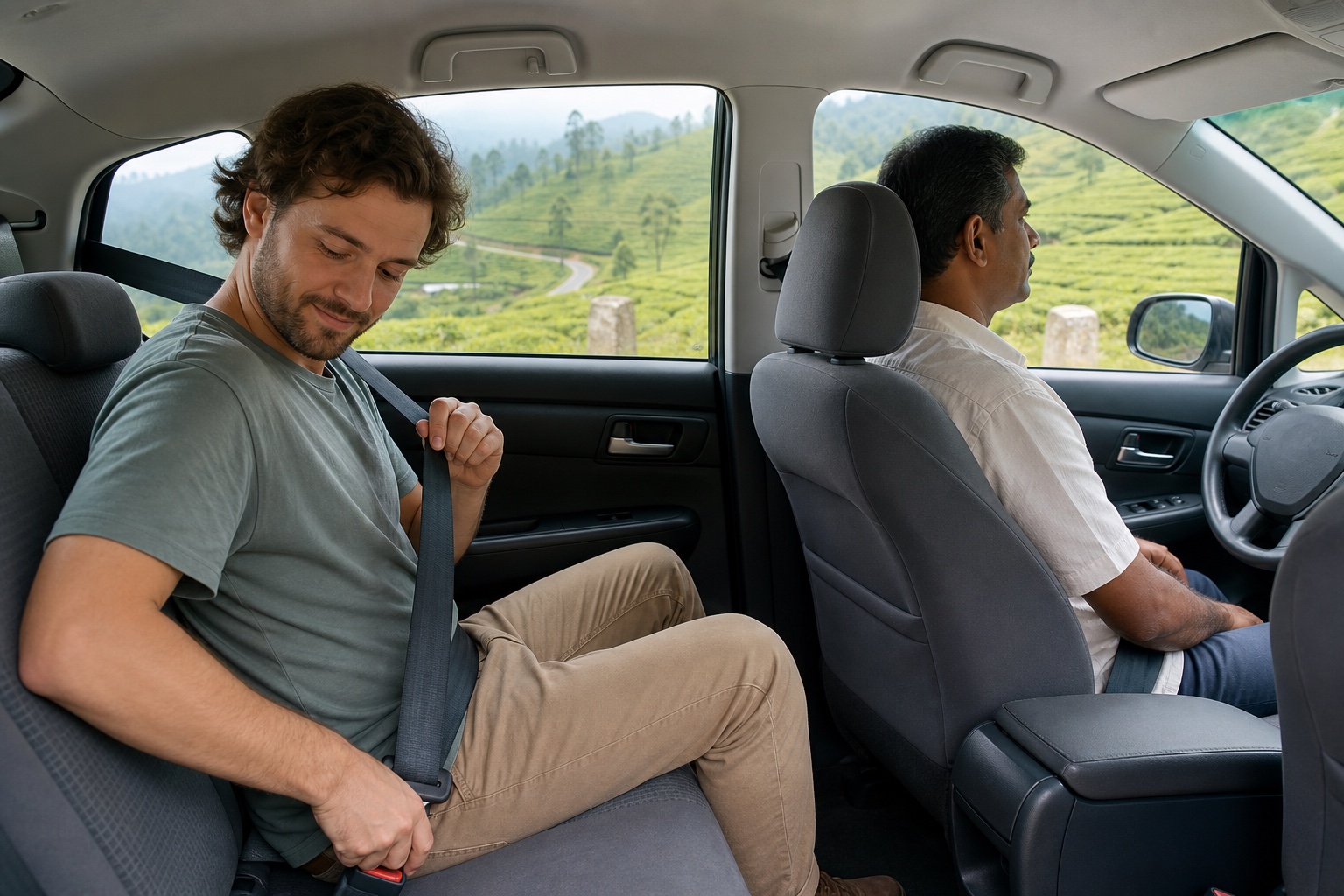
Before accepting a vehicle, check that it appears roadworthy and that usable seat belts are available for the seats you need. Do not hesitate to leave a tuk-tuk or taxi if the driver seems impaired, drives aggressively or makes you uncomfortable. When using buses, choose your seat and boarding point carefully; official advisories note lower safety standards and a significant accident risk on some intercity services.
Train-photo warning
Do not hang from an open train doorway or lean outside a window for a photograph. Fatal accidents involving visitors have occurred. Stay fully inside the carriage whenever the train is moving, even on scenic sections.
Practical precautions before you leave home
01
Check your own government’s advisory
Read the destination-wide guidance and any regional warnings. Subscribe to updates if your government offers them.
02
Buy insurance for the actual itinerary
Confirm medical evacuation, motorbike use, hiking, surfing, diving and other planned activities rather than assuming a basic policy covers them.
03
Prepare offline copies
Store passport, insurance, ETA, prescriptions, itinerary and emergency contacts in secure cloud storage and on one offline device.
04
Arrange a health consultation
TravelHealthPro recommends discussing destination, medical history and activities with a health professional ideally four to six weeks before travel.
05
Share the route
Give a trusted contact the accommodation list and major transfer dates, then agree how often you will check in.
06
Keep the first day light
Fatigue weakens judgement. Avoid a long road transfer, late-night arrival or ambitious activity immediately after landing.
Safety during demonstrations or security incidents
Do not join a demonstration as a spectator. Move away from crowds, government buildings and transport hubs affected by a gathering. If roads close, return to your accommodation or another secure indoor location instead of trying to pass a police line. Keep identification and essential medicines accessible, but avoid displaying large amounts of cash.
Terrorist attacks cannot be ruled out. Be alert in places that attract large crowds, including religious events, transport hubs, shopping areas, hotels and entertainment venues. This does not mean avoiding ordinary sightseeing; it means noticing exits, following security instructions and leaving if the situation changes.
Women, solo travellers and families
Solo travel is possible, but isolation increases the consequences of a bad transport or nightlife decision. Confirm the vehicle and driver before entering, sit where you feel comfortable, share your live route with someone you trust and avoid revealing your room number or exact plans to casual acquaintances.
Women may encounter staring, comments or unwanted advances. A firm refusal and early exit are often more useful than debating. If a driver behaves inappropriately, end the journey in a populated, well-lit place and report serious incidents. Families should supervise children closely near traffic, railway platforms, balconies, pools, beaches and animals.
Weather, beaches and wildlife
Sri Lanka’s tropical weather is regional, but severe rain can affect roads, railways and mountain districts outside a traveller’s preferred route. The Disaster Management Centre publishes situation reports, landslide warnings, river levels and flood warnings. Check those sources when heavy rain is forecast, and allow accommodation or transport providers to postpone a journey when local conditions are unsafe.
Never walk or drive through floodwater. At the coast, treat local swimming advice as more important than how calm the water looks. Strong currents can exist without dramatic waves, and lifeguard coverage is limited. Do not swim in rivers or lagoons without reliable local advice because crocodiles may be present.
Wild elephants, crocodiles, snakes and other animals should be observed from a safe distance with authorised guidance. Never encourage a driver to approach an elephant closely for a photograph. Avoid feeding or touching monkeys and dogs; any bite or scratch needs prompt medical assessment.
Local laws and cultural respect
Respect for Buddhist images is not only etiquette. Offensive treatment of religious objects can lead to serious legal consequences. Cover shoulders and knees at temples, remove shoes and hats when required, and do not pose with your back toward a Buddha image. Ask before photographing worshippers, monks, ceremonies or sensitive areas.
Do not photograph military sites, government buildings, official residences or security activity. High-security areas are not always clearly marked. Drug offences carry severe penalties. Public behaviour and dress expectations can be more conservative than at home, and laws affecting LGBT+ travellers differ from those in many countries; consult your government’s current local-law guidance before travel.
SAVE THESE OFFLINE
Essential Sri Lanka emergency numbers
Numbers and routing can change. Verify them on official pages before departure and save your embassy or consulate contact separately.
118 / 119Police emergency
1990Suwasariya ambulance
1912Sri Lanka Tourism hotline
What to do if something goes wrong
IMMEDIATE DANGER
Move first, document later
Go to a populated, well-lit or staffed place and call emergency services. Do not confront a suspect or return for property if doing so puts you at risk.
THEFT OR FRAUD
Block access and make a report
Freeze bank cards and devices, report the incident to police and request written acknowledgement for an insurance claim. Contact the Tourism hotline if visitor-specific assistance is useful.
MEDICAL PROBLEM
Contact care and your insurer
Seek medical help promptly, especially after an animal exposure, serious fever or injury. Tell the insurer early if evacuation, admission or a payment guarantee may be required.
MAJOR DISRUPTION
Use official instructions
Follow local authorities, your accommodation, airline and embassy. Preserve battery power, keep family together and avoid circulating unverified social-media claims.
Sri Lanka travel safety FAQ
Is Sri Lanka safe for solo travellers?
Solo travel is possible with stronger check-in, transport and accommodation habits. Avoid isolated arrivals, share routes and leave a vehicle or venue whenever you feel uncomfortable.
Is Colombo safe at night?
Risk varies by neighbourhood and situation. Use a reputable transport option, wait indoors for pickup, avoid poorly lit streets and keep drinks and belongings under your control.
Are tuk-tuks safe?
They are widely used, but driving and vehicle standards vary. Agree the price or use a working meter, keep belongings secure and end the trip if the driver’s behaviour concerns you.
Should tourists avoid northern Sri Lanka?
Not as a blanket rule, but mine and unexploded-ordnance warnings remain relevant in parts of the north and east. Stay on recognised roads and paths, obey signs and follow local security instructions.
What is the safest way to carry money?
Split cash and cards between secure locations, carry only the day’s amount, use bank or hotel ATMs when possible and review card transactions regularly.
Do I need travel insurance?
Appropriate insurance is strongly recommended. Medical care, evacuation, cancellations and adventure activities can create costs that a basic policy may not cover.
The balanced verdict
Sri Lanka is not a destination where every visitor faces serious trouble, and it is not a place where travellers should ignore current advisories. The strongest everyday precautions are simple: avoid demonstrations, choose transport carefully, stay inside moving trains, protect cards and bags, monitor official weather alerts, prevent mosquito bites and respect local laws.
If official advice changes before your trip, let the new information—not an old booking or social-media reassurance—guide the decision. Good travel safety is less about fear than about leaving enough flexibility to act early.
OFFICIAL INFORMATION
Recheck these sources before travel
Use your own government’s advice for the travel decision, and Sri Lankan authorities for live local conditions and assistance.
Editorial note: Ceylon Guidebook is an independent travel publication. This article provides general information, not legal, security, medical or insurance advice. Emergency numbers, advisories and local conditions can change.

 English
  French
  German
  Spanish
  Dutch
Dutch  Chinese
  Hindi
Hindi  Arabic
コメント